
Nutrition
PCOS Diet Plan for Indian Women: The Complete Guide with Free 7-Day Meal Plan
Struggling with PCOS on an Indian diet? A complete clinically-grounded guide for Indian kitchens — roti, dal, sabzi — with a free 7-day meal plan, foods to avoid, micronutrient gap guidance, and the exact pairings that unlock iron absorption.
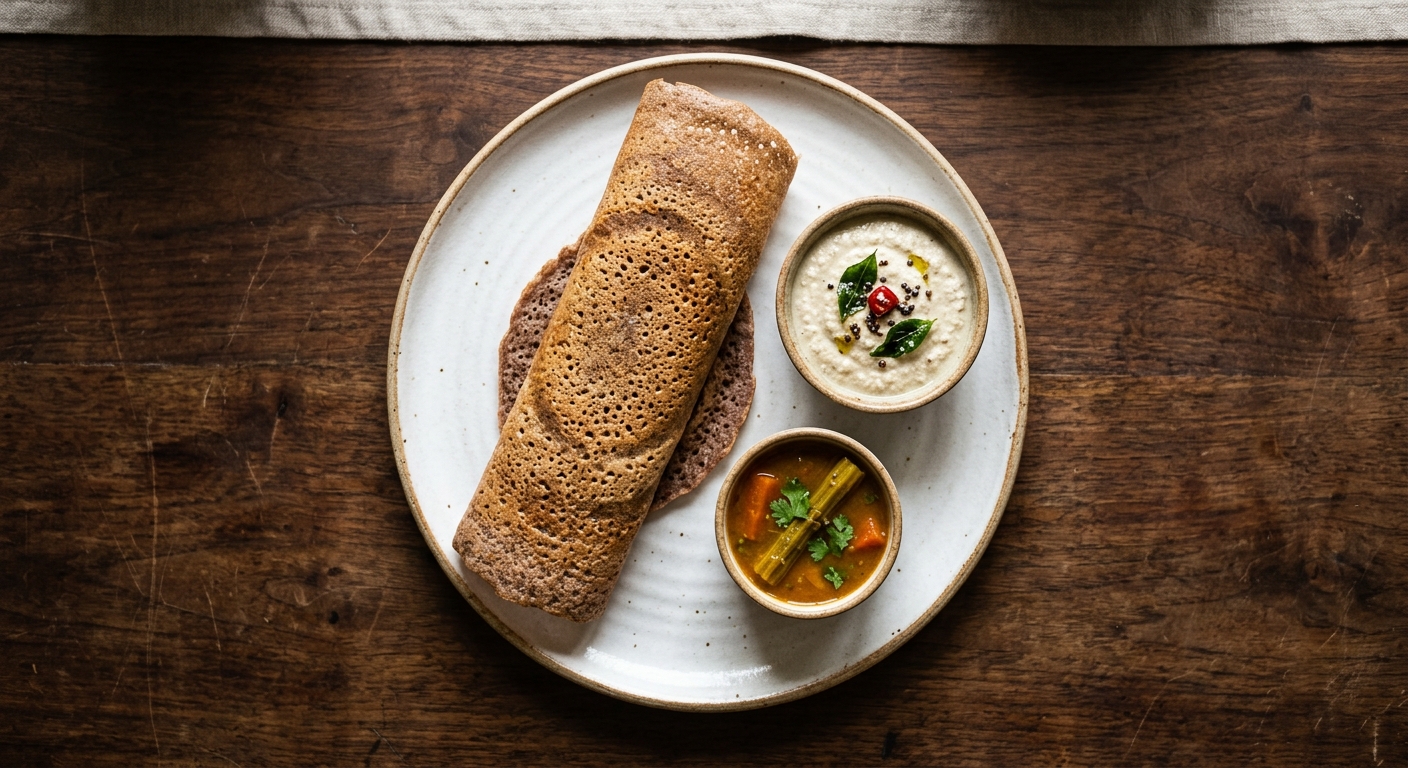
The short answer: A PCOS diet plan for Indian women focuses on low-GI foods that stabilise blood sugar and reduce insulin resistance — the root driver of most PCOS symptoms. Meals built around complex carbs (jowar, bajra, ragi), lean protein (dal, paneer, eggs), and anti-inflammatory fats (mustard oil, flaxseeds) are the foundation. Avoiding maida, large portions of white rice without protein, and packaged foods is equally important. The goal is not calorie restriction — it is glycaemic control, inflammation reduction, and closing specific micronutrient gaps.
Why every PCOS diet you've tried hasn't stuck
If you've been diagnosed with PCOS, you've probably received some version of the same advice: eat healthy, cut sugar, lose weight. And if you've searched online for a meal plan, you've likely found something built around avocado, salmon, kale, and quinoa — foods that may appear in a Chennai supermarket, but don't live in most Indian kitchens or family cooking routines.
This isn't a small problem. The gap between "clinically correct nutrition advice" and "food that actually fits your life" is where most PCOS diet plans fail. You know what you're supposed to eat. The plan just doesn't survive contact with your actual kitchen, your family's preferences, your 30-minute weekday cooking window, or the sabzi your mother-in-law made for dinner.
What the research says about Indian PCOS
India has one of the highest PCOS prevalence rates in the world — 1 in 5 urban Indian women of reproductive age is affected. Yet the overwhelming majority of nutrition research, apps, and diet plans are calibrated for Western dietary patterns. The Indian diet — predominantly vegetarian, high in lentils and millets, reliant on dairy, and deeply regional — interacts with PCOS differently. A plan built for it should reflect that.
The second failure mode is static plans. A PDF doesn't know that you skipped Tuesday's lunch because you were in back-to-back meetings. It doesn't know that your iron came back low at your last blood test. It doesn't know that you've quietly stopped eating the ragi dosa it suggested because you live alone and making dosa batter for one is impractical. A plan that can't adapt isn't really a plan — it's a document.
What PCOS does to your body — and why food is the highest-leverage tool you have
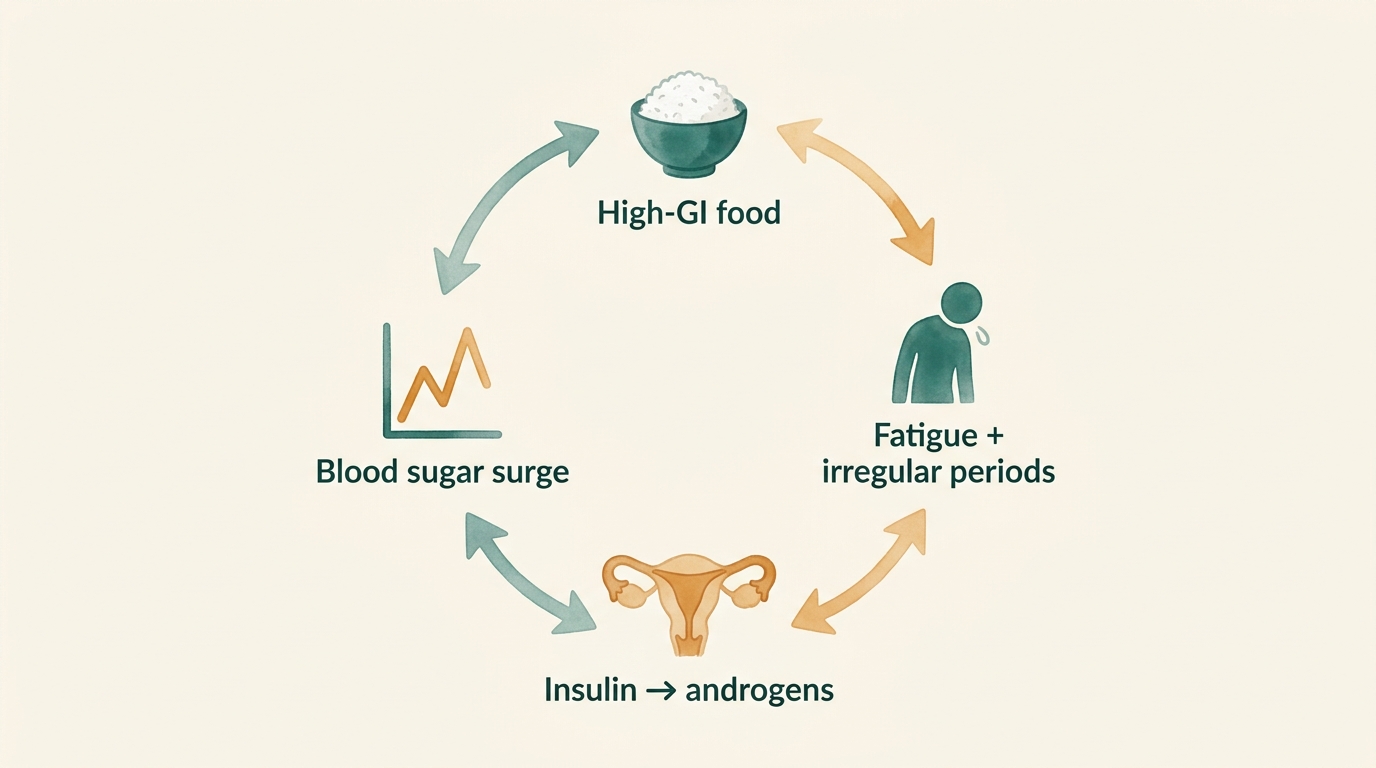
The PCOS-insulin-androgen cycle — and why food is the most direct intervention point.
Understanding the mechanism makes every food choice make sense — instead of following rules you don't understand.
Approximately 70-80% of women with PCOS have some degree of insulin resistance. This means your cells don't respond normally to insulin, so your pancreas produces more and more of it to compensate. Chronically elevated insulin does two things that make PCOS worse: it signals the ovaries to produce more androgens (male hormones like testosterone), and it promotes fat storage, particularly around the abdomen. The androgens disrupt ovulation, cause irregular periods, drive acne along the jawline, and trigger excess hair growth.
The food connection is direct: high-glycaemic-index carbohydrates spike blood sugar rapidly, forcing a large insulin response. Eat a large plate of white rice with nothing else, and the insulin surge that follows worsens every aspect of your hormonal profile. Eat the same rice in a smaller portion paired with rajma, raita, and a palak sabzi — and the glycaemic load of the entire meal drops dramatically, the insulin response flattens, and the hormonal impact is completely different.
PCOS is also an inflammatory condition. Chronic low-grade inflammation worsens insulin resistance, drives fatigue, and contributes to the mood symptoms that often accompany PCOS. Anti-inflammatory foods — turmeric, omega-3-rich seeds, dark leafy greens — reduce this burden directly.
The 4 specific micronutrient gaps in PCOS
Women with PCOS are statistically more likely to be deficient in:
- Iron — compounded by heavy periods. Non-heme iron from plant sources needs Vitamin C to absorb properly.
- Vitamin D — deficient in over 70% of urban Indian women regardless of PCOS status. Critical for insulin signalling.
- Vitamin B12 — especially in vegetarians and vegans. Affects energy, nerve function, and mood.
- Magnesium and Zinc — support hormone synthesis, regulate cortisol, and reduce inflammatory markers.
A generic diet plan may be "healthy" and still leave all four of these gaps open.
The best Indian foods for PCOS — your kitchen already has most of these
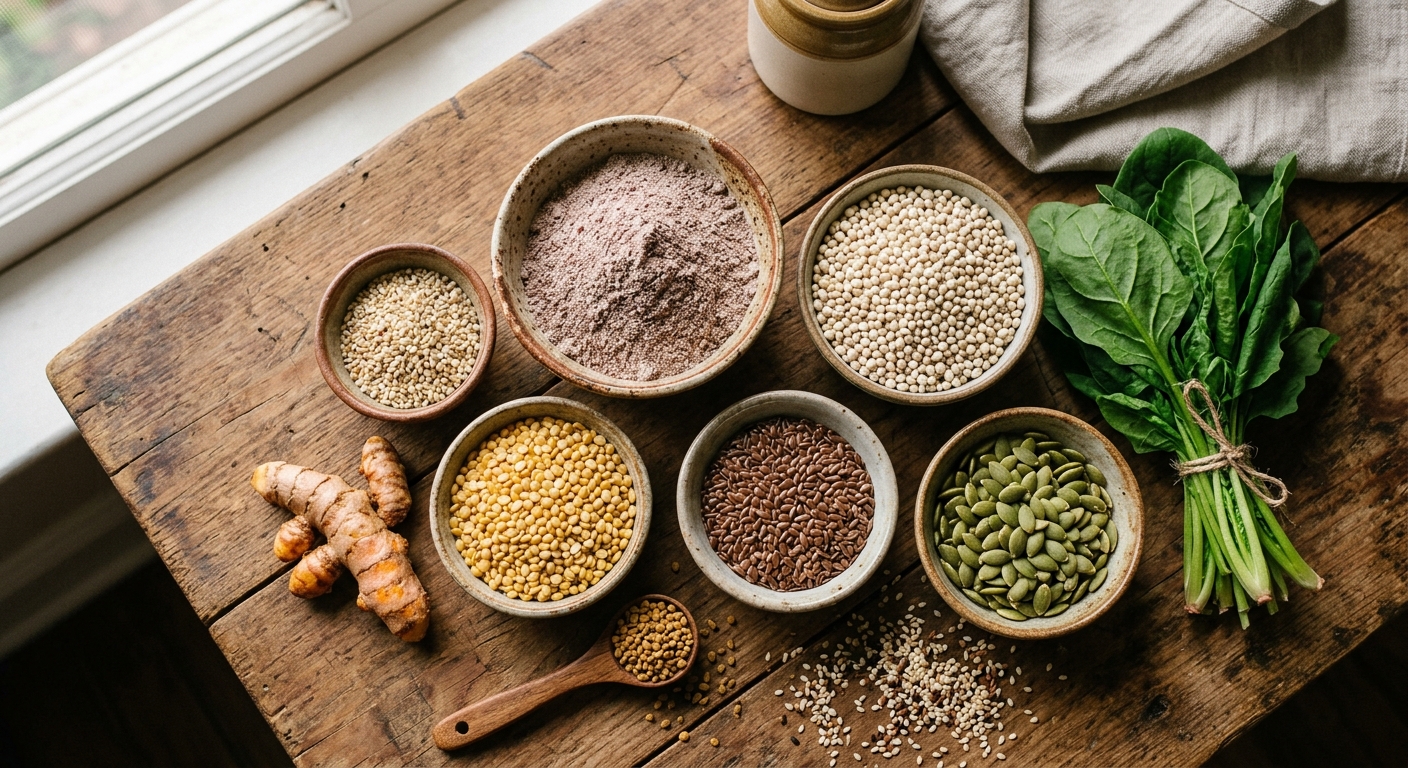
PCOS-friendly Indian foods — almost all of them are already staples of the Indian pantry.
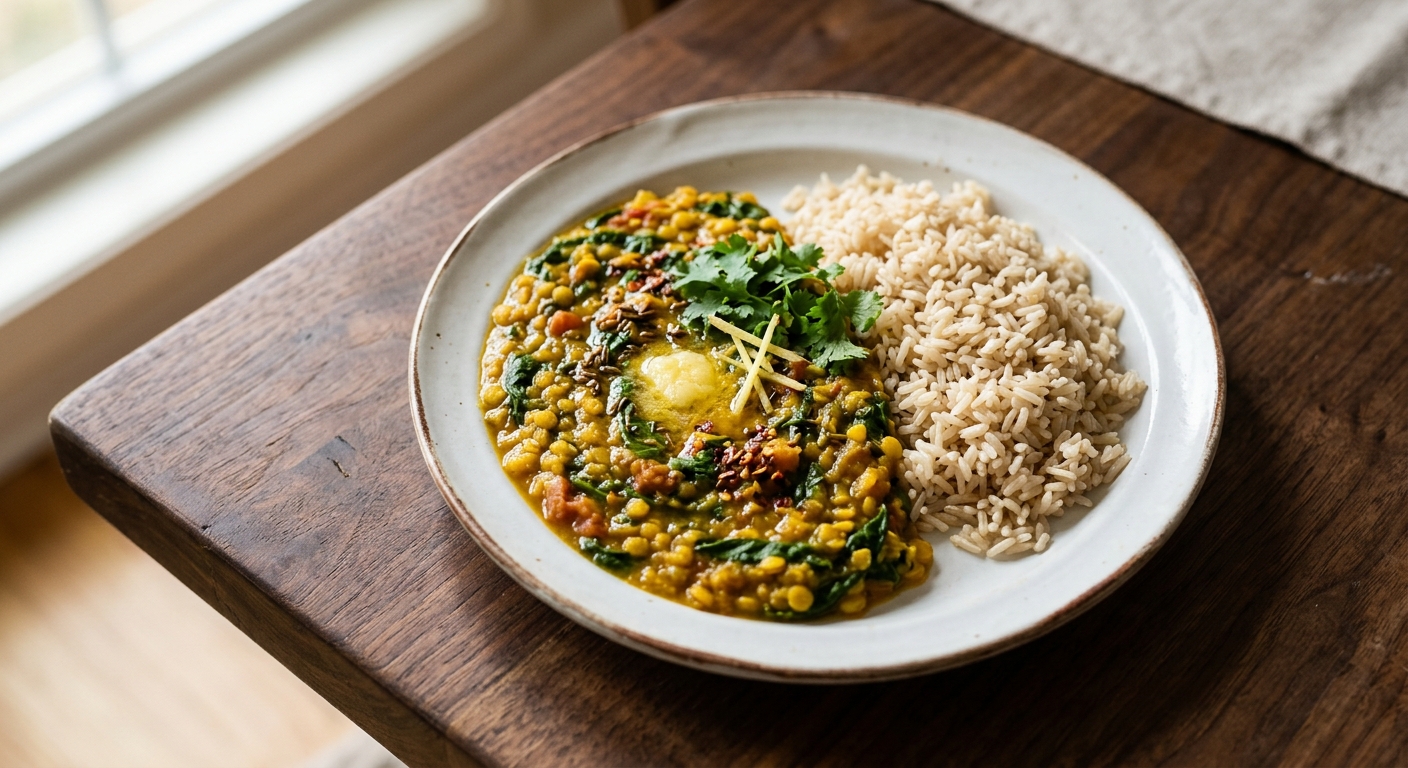
Dal palak with brown rice — iron from spinach, complete protein from dal, fibre from brown rice. A textbook PCOS lunch.
1. Low-GI complex carbohydrates
These are your carbohydrate foundation — they provide energy without the sharp insulin spike of refined grains.
- Ragi (finger millet) — GI of ~55, rich in calcium and iron. Ragi dosa, ragi mudde, ragi porridge.
- Jowar (sorghum) — GI of ~50, high fibre, naturally gluten-free. Jowar roti is one of the best PCOS breads.
- Bajra (pearl millet) — rich in magnesium and zinc, both deficient in most PCOS profiles. Bajra roti in winter months.
- Oats — beta-glucan in oats specifically improves insulin sensitivity. Oats upma or overnight oats with minimal sugar.
- Brown rice in controlled portions — not banned, but paired with protein and fat, not eaten alone in large quantities.
2. Protein sources
Protein slows carbohydrate absorption, reduces insulin secretion relative to carb-only meals, and is critical for maintaining muscle mass — which itself improves insulin sensitivity. Aim for protein at every meal, not just dinner.
- Moong dal, chana dal, masoor dal, rajma, chhole — all excellent. Dal at lunch and dinner is not repetitive — it's strategic.
- Paneer (in moderation) — excellent protein source. Low-fat or homemade paneer preferred. 80-100g per serving is appropriate.
- Eggs — for lacto-ovo vegetarians, one of the most bioavailable protein sources. Boiled, scrambled, or in a sabzi.
- Tofu — for vegans, a clean protein source. Daily tofu is fine — the concern about soy hormones is overstated for typical consumption amounts.
- Sprouts — moong sprouts especially. Add to salads, chaat, or as a morning snack. Cheap, easy, high protein.
- Chicken and fish (non-vegetarian) — lean sources of protein and, in fish, omega-3 fatty acids. Avoid deep-frying.
3. Anti-inflammatory fats
- Flaxseeds (alsi) — contain lignans that reduce androgen levels in PCOS. One tablespoon in your roti atta, dal, or smoothie daily.
- Pumpkin seeds — zinc and magnesium in one snack. A small handful mid-morning.
- Ghee (in small amounts) — a small teaspoon on your roti is not a problem. The fat slows glucose absorption from the meal. Excess is the issue.
- Mustard oil and cold-pressed coconut oil — better choices than refined vegetable oils for everyday cooking.
- Walnuts and almonds — omega-3 and magnesium. A small handful as a snack or added to oats.
4. Iron-rich foods (especially important for PCOS)
Non-heme iron (plant sources) is less bioavailable than heme iron from meat. The trick is pairing iron-rich foods with Vitamin C — which increases absorption threefold.
- Palak (spinach) with tomato or a squeeze of lemon — a near-perfect iron combination.
- Ragi — unusual for a grain in being iron-rich as well as calcium-rich.
- Rajma and chhole — iron plus protein, doubly strategic.
- Til (sesame seeds) — tablespoon of til laddoo or til in dal is a meaningful iron contribution.
- Horse gram (kulith) — underused South Indian ingredient with high iron content.
Do not have chai within 45-60 minutes of iron-rich meals. Tannins in black tea bind to iron and block absorption.
5. Herbs and spices with specific PCOS benefits
- Methi (fenugreek) — improves insulin sensitivity, supports menstrual regularity.
- Turmeric (haldi) — curcumin is one of the best-studied anti-inflammatory compounds.
- Cinnamon (dalchini) — shown to improve insulin sensitivity. Add to morning oats or chai.
- Jeera (cumin) — supports digestion and has mild anti-androgen properties.
Foods to limit with PCOS — the Indian kitchen edition
Nothing is permanently banned. The goal is to reduce the frequency and quantity of foods that worsen insulin resistance and inflammation — not to create a joyless list of forbidden items.
Your free 7-day PCOS meal plan — Indian kitchen edition
This plan is vegetarian and designed for a North/South Indian kitchen. It targets approximately 1,500-1,700 kcal per day with 25-30% protein, 40-45% low-GI carbohydrates, and 25-30% fat. Adjust portion sizes based on your individual caloric needs.
Before you start
This is a sample plan — not a prescription. Every woman's PCOS profile, micronutrient gaps, cuisine preferences, and caloric requirements are different. The plan below is a starting point. An adaptive plan built for your specific numbers will always outperform a generic template.
Day 1 — Full detail
Vegetarian · South Indian preference · PCOS + mild insulin resistance
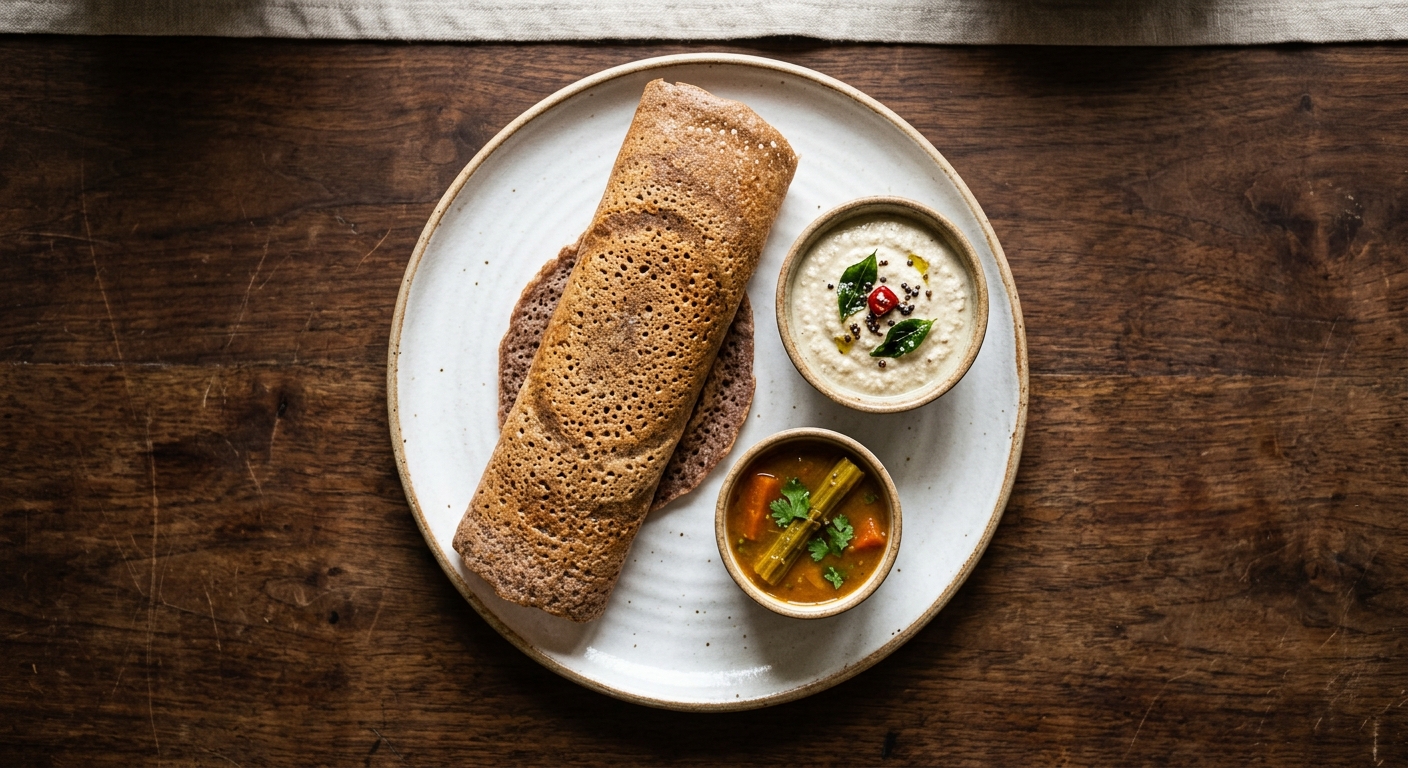
Day 1 breakfast — ragi dosa with coconut chutney. Low-GI, iron-rich, ~9g protein per serving.
| Meal | What to eat | Why it works for PCOS |
|---|---|---|
| Breakfast 8:00 am | 2 ragi dosas with coconut chutney (no sugar) + 1 cup unsweetened green tea | Ragi = low GI + calcium + iron (~2.1mg). Protein: ~9g. Green tea improves insulin sensitivity. |
| Mid-morning 11:00 am | Small handful of roasted pumpkin seeds + 1 guava | Pumpkin seeds = zinc (~1.8mg) + magnesium. Guava = Vitamin C, which helps iron from breakfast absorb better. |
| Lunch 1:00 pm | 1 jowar roti + moong dal tadka + palak sabzi + cucumber raita + kachumber | Jowar = low GI. Moong dal = complete protein (18g per meal). Palak = iron + folate. Raita = probiotic + B12. Kachumber Vit-C unlocks iron absorption from palak. |
| Evening snack 4:00 pm | Moong sprouts chaat with lemon + jeera, no sev | Protein snack prevents the 4pm insulin dip. Lemon = Vitamin C for iron absorption. No refined carb. |
| Dinner 7:30 pm | Small portion brown rice + rajma curry + cucumber raita + kachumber + 1 tsp flaxseed | Rajma = protein (15g) + fibre. Flaxseeds = omega-3 (reduces PCOS inflammation). Brown rice + protein = controlled glycaemic load. Raita + kachumber complete the iron-Vit-C pairing. |
Days 2-7 — Weekly overview
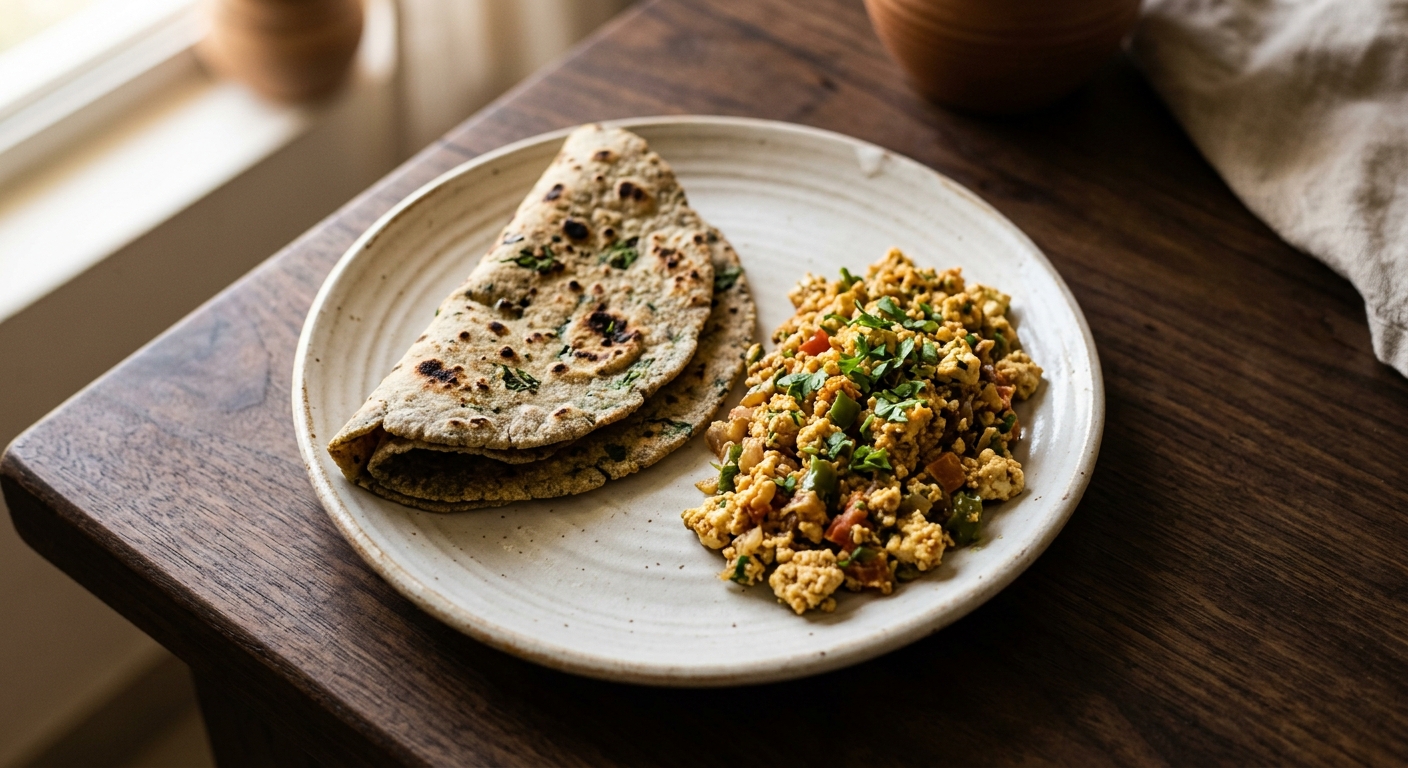
Methi bajra roti with paneer bhurji — bajra brings magnesium, methi steadies blood sugar, paneer closes the protein gap.
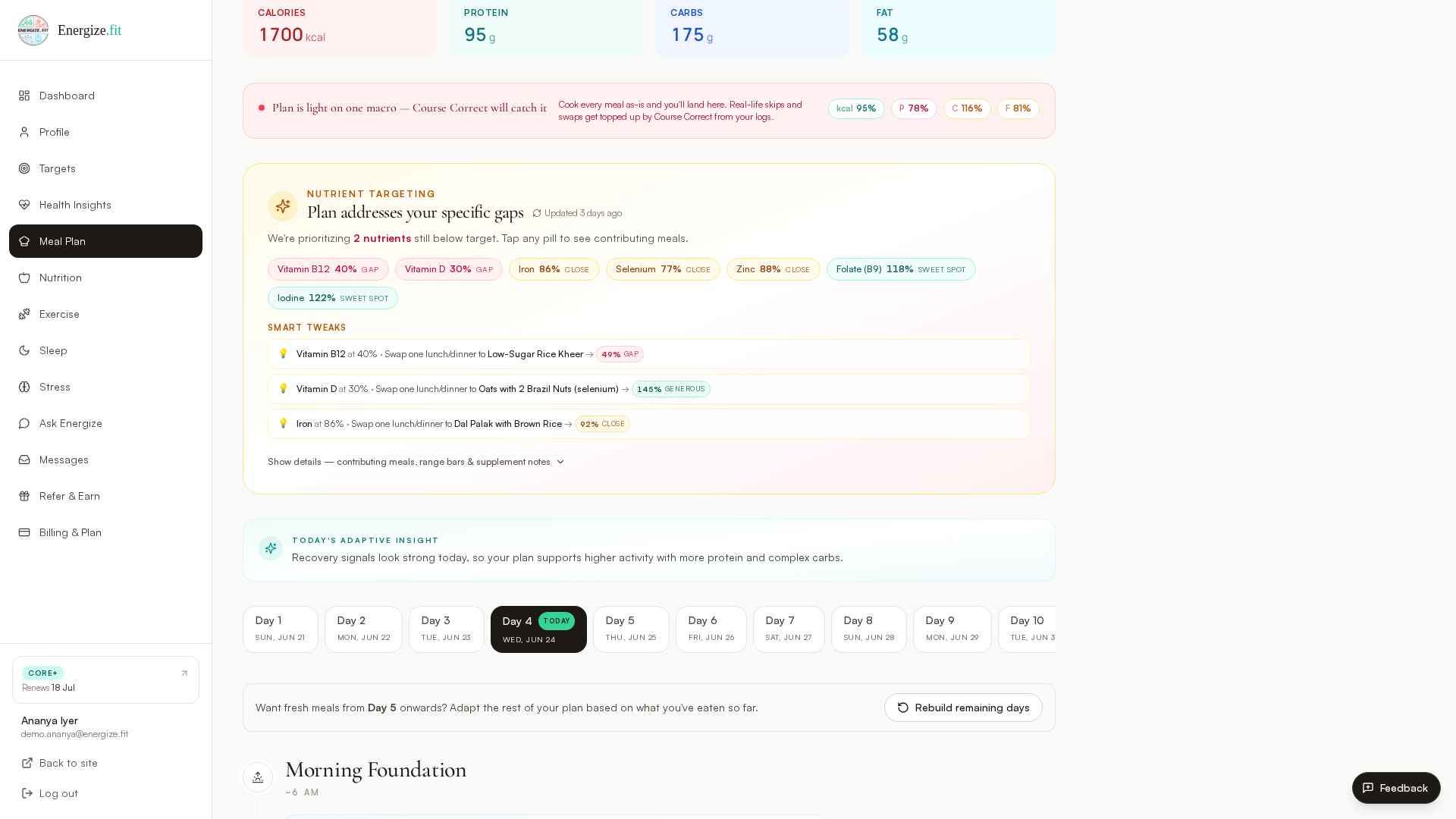
The full 7-day plan as it appears in the Energize.fit app — every dish tagged for PCOS safety, with macros, 13 micronutrients tracked, and persona-aware accompaniments (raita + kachumber + lemon when iron-rich).
| Day | Breakfast | Lunch | Dinner | Key nutrient focus |
|---|---|---|---|---|
| Day 1 | Ragi dosa + coconut chutney | Jowar roti + moong dal + palak sabzi (+ raita + kachumber) | Brown rice + rajma (+ raita + kachumber) | Iron, Zinc |
| Day 2 | Oats upma + boiled egg | Multigrain roti + chana dal + lauki sabzi (+ raita + kachumber) | Bajra roti + methi sabzi (+ chaas + kachumber) | Magnesium, B12 |
| Day 3 | Moong dal chilla (2) + green chutney | Brown rice khichdi + raita | Jowar roti + palak paneer (light) (+ raita + kachumber) | Protein, Calcium |
| Day 4 | Besan cheela + coriander chutney + chaas | Ragi mudde + sambar + beans palya (+ kachumber) | Multigrain roti + rajma curry (+ raita + kachumber) | Iron, Omega-3 |
| Day 5 | Oats porridge + alsi + 1 banana | Jowar roti + moong dal + bhindi sabzi (+ raita + kachumber) | Brown rice + chhole (+ raita + kachumber) | Vitamin D, Zinc |
| Day 6 | Ragi dosa + sambar | Multigrain roti + toor dal + spinach sabzi (+ raita + kachumber) | Bajra khichdi + curd + roasted pumpkin seeds | Folate, Magnesium |
| Day 7 | Sprouts poha + green tea | Jowar roti + black chana sabzi + lauki raita | Brown rice + palak dal (+ raita + kachumber + 1 tsp flaxseed) | Iron, B12, Omega-3 |
Mid-morning and evening snacks (same across all 7 days)
Mid-morning (11am): Rotate between roasted pumpkin seeds + seasonal fruit (guava, apple, pear), a handful of almonds + walnuts, or a small bowl of moong sprouts with lemon.
Evening snack (4pm): Rotate between sprouts chaat, roasted chana with nimbu, a small bowl of plain low-fat dahi, or a handful of makhana (fox nuts, lightly roasted).
The part most PCOS plans miss: your micronutrient gaps
The 7-day plan above is clinically sound. But here's what it can't do for you: it doesn't know that your iron is at 52% of your daily target, not 89%. It doesn't know that your B12 has been dropping for three months. It doesn't know that you've been consistently skipping the palak sabzi because your family doesn't like it.
A static plan treats everyone with PCOS the same. Your actual PCOS profile — your specific deficiencies, your cuisine preferences, your cooking patterns — is unique to you.
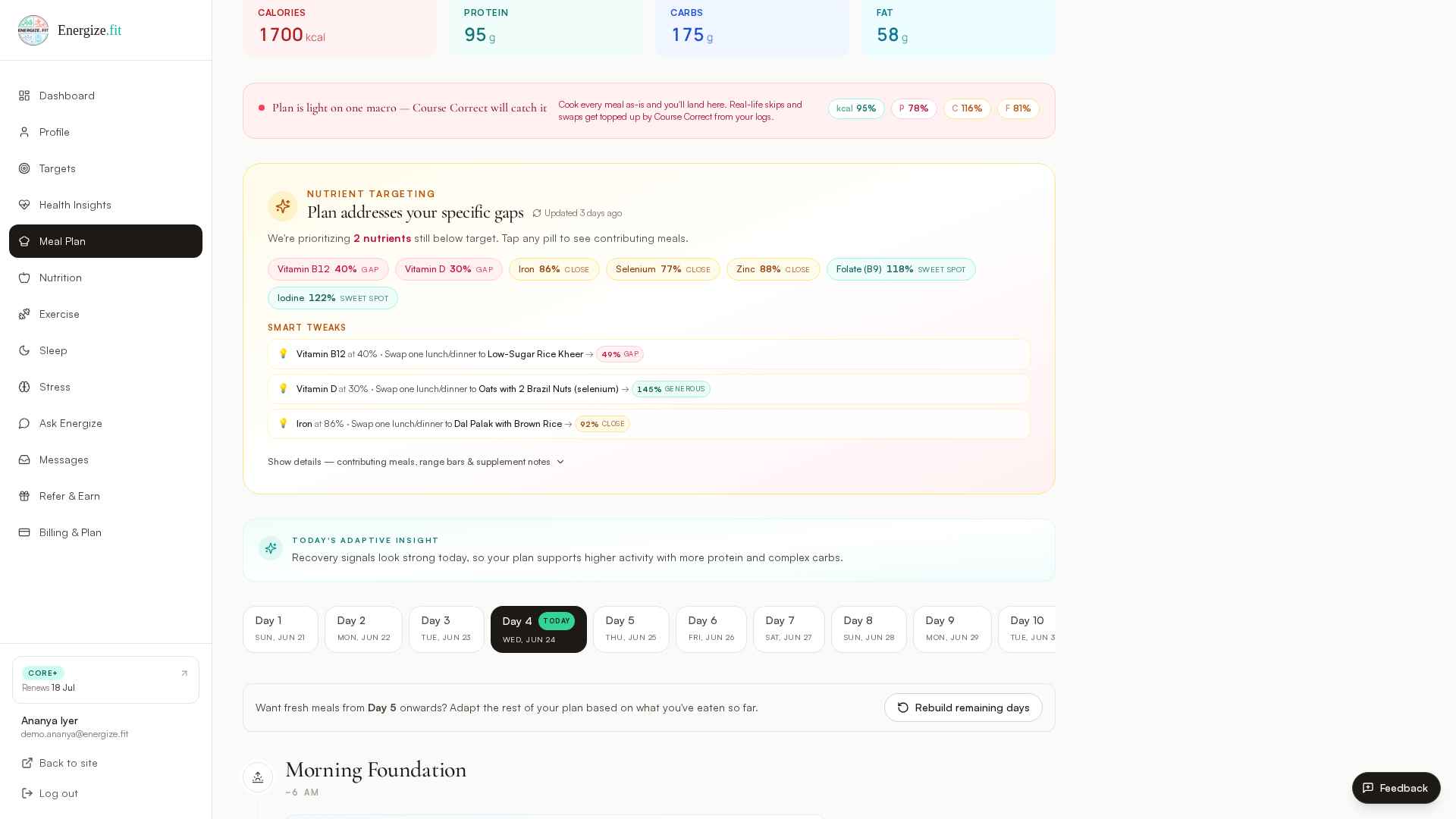
The Energize.fit micronutrient dashboard — every dish (and every accompaniment) is scored against 13 nutrients using ICMR-NIN food composition data. The plan tells you exactly which dish closes each gap.
This is what Energize.fit tracks across your full plan — 13 micronutrients per dish, per day, using ICMR-NIN food composition tables, not AI estimates.
When your iron coverage is at 52% for the week, Energize.fit doesn't just show you a red bar. It tells you exactly which swap closes the gap:
Every suggestion is cross-checked against your dietary restrictions, allergies, and conditions automatically.
3 habits that make the meal plan actually stick
The best meal plan in the world fails if it doesn't survive your actual life. These three habits address the most common ways PCOS diet plans break down.
1. Protein at breakfast — non-negotiable
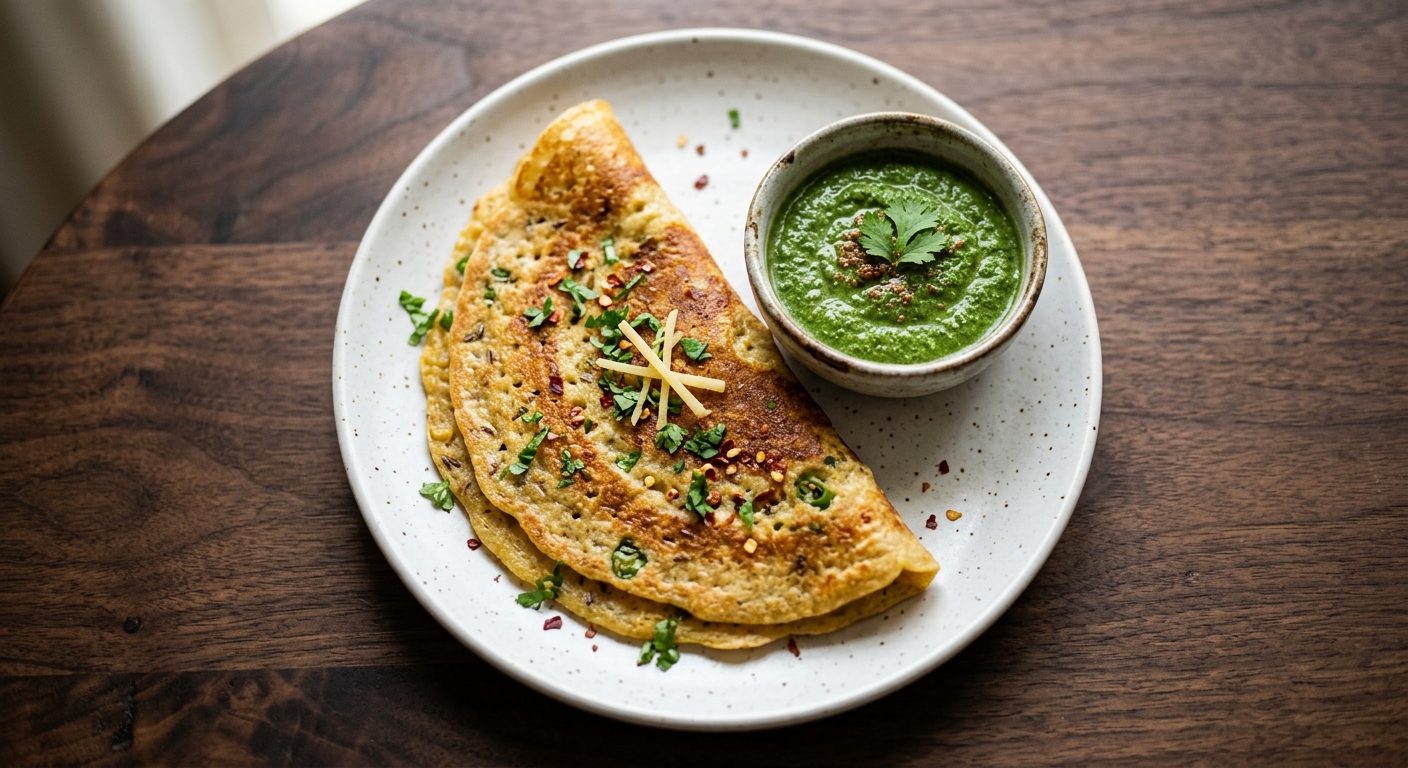
Moong dal chilla with mint chutney — 18g protein, low GI, ready in 10 minutes.
Most Indian breakfasts are carbohydrate-dominant: poha, idli, upma, paratha. For a woman with PCOS and insulin resistance, a high-carb, near-zero-protein breakfast creates a predictable blood sugar spike followed by a mid-morning or early afternoon crash. This is the biological cause of the 3pm fatigue most women with PCOS experience daily.
The fix is simple: add protein to whatever you're already eating. One boiled egg alongside your poha. A katori of moong dal with your idli. A tablespoon of flaxseeds in your oats. You are not changing the breakfast — you are changing its metabolic effect.
2. Eat within one hour of waking
Skipping breakfast raises cortisol — your primary stress hormone. Elevated cortisol worsens insulin resistance and disrupts the LH:FSH balance that is already disrupted in PCOS. For women managing PCOS, breakfast skipping is a genuine clinical concern, not just a general wellness tip.
3. Track — even imperfectly
You don't need to weigh every gram. But knowing roughly what you ate, and seeing that your iron coverage is at 52% on the days you skip palak, closes the feedback loop that static plans miss entirely.
This is a sample plan. Yours is different.
Your PCOS profile — your micronutrient gaps, your regional cuisine, your cooking time, your medical history — is unique to you. Energize.fit builds your exact plan in under 2 minutes. Real Indian food. Real clinical data.
Get my free PCOS plan →Free 7-day trial · No credit card · Cancel anytime
Frequently asked questions about PCOS diet in India
Yes — in controlled portions and always paired with protein and fat. A small bowl of brown rice with rajma and a side salad has a very different glycaemic effect than a large plate of white rice alone. The glycaemic load of the full meal matters more than any single ingredient. If you are eating rice with nothing else, that is the problem — not the rice itself.
Absolutely — but it requires intentional planning. Protein and iron are the most common gaps in vegetarian PCOS diets. Dal, paneer, tofu, ragi, sesame, and Vitamin C-rich foods close most of these gaps when combined correctly. Track your B12 separately if you are strictly vegetarian or vegan; it is very difficult to get adequate B12 without eggs or dairy.
Most women notice improvements in energy and reduced bloating within 2-3 weeks of consistent dietary change. Period regularity often improves within 1-2 cycles, particularly in women with mild-to-moderate insulin resistance. Hormonal and blood markers — LH:FSH ratio, testosterone, fasting insulin, HbA1c — typically show measurable improvement in blood tests after 60-90 days.
A well-planned meal plan significantly reduces the supplement burden. However, Vitamin D and B12 deficiencies are nearly universal in urban Indian women with PCOS and are difficult to correct through diet alone — supplementation is often recommended after confirmed deficiency via blood test. Always discuss supplementation with your doctor before starting.
For women with mild-to-moderate PCOS and insulin resistance, dietary and lifestyle changes can produce meaningful, clinically measurable improvements — sometimes more effectively than medication for symptom management. However, some women with severe symptoms, fertility concerns, or specific hormonal profiles require medical management alongside dietary change. Work with your gynaecologist to determine the right combination for your case.
The bottom line
Managing PCOS through diet is not about eating less. It is about eating differently — strategically targeting the insulin resistance and inflammation that drive your symptoms, with the foods that already exist in your kitchen.
Ragi, jowar, moong dal, rajma, palak, flaxseeds, pumpkin seeds, methi — these are not exotic health foods. They have been in Indian kitchens for generations. What has been missing is a plan that uses them precisely: the right dish, at the right meal, with the right pairing, calibrated to your specific micronutrient gaps and your condition profile.
The 7-day plan in this guide is a starting point. It will move the needle. But a plan that adapts daily to what you actually ate yesterday, flags when your iron coverage is dropping, and tells you exactly which swap closes the gap — that is the difference between knowing what to eat and actually getting better.
Your PCOS plan is waiting. It takes 2 minutes to build.
No Western food. No generic templates. A plan built for your Indian kitchen, your condition, your cuisine preference, and your micronutrient gaps — updated every day based on what you actually eat.
Start my free PCOS plan →Free 7-day trial · No credit card · Cancel anytime
Wellness guidance that evolves with you.
Nutrition, movement, sleep, and stress connected into one adaptive wellness system — quietly adjusting around your routines, goals, and daily signals.
Start your 7-day free trial Explore the platformRelated reading
Keep going

Nutrition
How to Actually Read Your Blood Report
Your lab report is a decision-making tool, not a filing cabinet. Seven markers worth understanding.

Adaptive Wellness
Why Most Meal Plans Fail After 2 Weeks
Most meal plans don't fail because people are lazy. They fail because life changes faster than the plan does.

Nutrition
The Plate Method: Eating for Energy Without Counting Calories
A visual framework I use with every client. No calculators, no guilt, no all-or-nothing thinking.